Here is a full Harvard referenced list of all the sources I used when creating my game.
13LEAGUES (2020) Superstition S2 [Online] Available at: https://13leagues.itch.io/superstition-s2 [Accessed 10th May 2020]
CORE DESIGN. (1996) Tomb Raider [DISC] PlayStation. Derby, England: Eidos Interactive
CROWSCROWSCROWS (2018) The Temple of No [Online] Available at: https://crowscrowscrows.itch.io/the-temple-of-no [Accessed 10th May 2020]
CROWTHER. W & WOODS. D (1977) Colossal Cave Adventure [DISC] PC.
DIGITALEXPOSURETV (2017) Twine 2.0 - Introduction / Tutorial #1 [Online Video]. October 28th. Available from: https://www.youtube.com/watch?v=iKFZhIHD7Xk&feature=emb_title [Accessed: 10th May 2020]
DESIRELINES (2020) Pup in the Park [Online] Available at: https://desirelinesgames.itch.io/pup-in-the-park [Accessed 10th May 2020]
FRAYTAG. G (2017) Freytag's Pyramid. 1st ed. [EBOOK] L.Kip Wheeler, p.1. Available at: https://web.cn.edu/kwheeler/documents/Freytag.pdf [Accessed 10th May 2020]
ITCH.IO (2015) Itch.io - indie game hosting marketplace [Online] Available at: https://itch.io/ [Accessed: 10th May 2020]
KILMAS. C (2009) Twine [SOFTWARE] Windows PC
MCCREE. N (1996) Tomb Raider OST (Soundtrack) Derby: Core Design
MCCREE. N (1997) Tomb Raider II: Starring Lara Croft OST (Soundtrack) Derby: Core Design
NAUGHTY DOG (2017) Uncharted: The Lost Legacy [DISC] PlayStation4. Santa Monica, California: Sony Interactive Entertainment
NINTENDO (2018) Super Smash Bros. Ultimate [CARTRIDGE] NintendoSwitch. Japan: Nintendo
PLATINUM GAMES (2009) Bayonetta [DIGITAL DOWNLOAD] NintendoSwitch. Japan: Nintendo
TRSEARCH (2002) TRSearch [Online] Available at: https://www.trsearch.org/ [Accessed: 10th May 2020]
VOXEL VAGRANT (2016) 01 Narrative Design in Twine [Online Video]. November 27th. Available from: https://www.youtube.com/watch?v=BnhCfyEMQmg&feature=emb_title [Accessed: 10th May 2020]
Showing posts with label Gaming. Show all posts
Showing posts with label Gaming. Show all posts
Sunday, 10 May 2020

Saturday, 9 May 2020
Storytelling and Gaming 18 - Final product
I wanted to create a post just to show a screenshot of what the final product looks like, as well as give some final points:
 I'm actually quite proud of what I have created. It's been a long time since I have done any sort of creative writing, so creating a story this long has been challenging but also enjoyable at the same time. I went into this with a lot of inspiration for the Tomb Raider series and I think I have created quite a faithful adaptation of the source material whilst creating something new and unique and in a completely different medium.

I will definitely be using Twine again in the future, whether it be for a University project or for my own personal enjoyment. I'm not very experienced in coding so this software is very easy to get the hang of, and the minimal coding is a big bonus for me. One day I would like to push myself to try more coding and create a 3D narrative experience of my own, but this was a great way of expressing some creative ideas in a format that I was comfortable with. Also, when researching how many great and spectacular Twine games other people have made, I would love to try and create something similar to those sometime.
For now though, I am very satisfied with my final outcome and I'm excited for other people to try it out and give me some feedback on it!
KILMAS. C (2009) Twine [SOFTWARE] Windows PC


I will definitely be using Twine again in the future, whether it be for a University project or for my own personal enjoyment. I'm not very experienced in coding so this software is very easy to get the hang of, and the minimal coding is a big bonus for me. One day I would like to push myself to try more coding and create a 3D narrative experience of my own, but this was a great way of expressing some creative ideas in a format that I was comfortable with. Also, when researching how many great and spectacular Twine games other people have made, I would love to try and create something similar to those sometime.
For now though, I am very satisfied with my final outcome and I'm excited for other people to try it out and give me some feedback on it!
KILMAS. C (2009) Twine [SOFTWARE] Windows PC
Wednesday, 6 May 2020
Storytelling and Gaming 17 - Other ideas
Throughout the process of creating my game I had several other ideas that I considered but ultimately decided to avoid them. I thought it would be interesting to collate them here in a blog post.
There was one set of choices that I wanted to include in the final game but I ultimately decided to scrap it. After the dart trap scenario I thought about including a wolf that had been injured by the dart trap and it was up to the player if they wanted to leave it or put it out of its misery. Then later on, there would be a path with weak ground and if you hadn't killed the wolf, the wolf would catch up to you and the weight of the player and the wolf would cause the ground to collapse and set the player on a different path. I decided to scrap this idea for a number of reasons. I couldn't figure out a way that this wolf would have survived trapped in this tomb for however long. I also thought it was a pretty dark and cruel option to give the player, and I didn't want the player to regret a choice they had made. Plus who wants to kill a wolf. :(
Another idea I had was to go in a different route with the Twine story all together. Before I even knew I wanted to make a Twine game, I had an idea of creating a more deep and personal narrative that would focus on love and relationships, something akin to Life Is Strange. I thought a narrative like this would be a little more interesting than the treasure hunting direction, but ultimately I decided to against it because I just didn't know enough about narratives of that genre to be confident in writing one myself.
There was one set of choices that I wanted to include in the final game but I ultimately decided to scrap it. After the dart trap scenario I thought about including a wolf that had been injured by the dart trap and it was up to the player if they wanted to leave it or put it out of its misery. Then later on, there would be a path with weak ground and if you hadn't killed the wolf, the wolf would catch up to you and the weight of the player and the wolf would cause the ground to collapse and set the player on a different path. I decided to scrap this idea for a number of reasons. I couldn't figure out a way that this wolf would have survived trapped in this tomb for however long. I also thought it was a pretty dark and cruel option to give the player, and I didn't want the player to regret a choice they had made. Plus who wants to kill a wolf. :(
Another idea I had was to go in a different route with the Twine story all together. Before I even knew I wanted to make a Twine game, I had an idea of creating a more deep and personal narrative that would focus on love and relationships, something akin to Life Is Strange. I thought a narrative like this would be a little more interesting than the treasure hunting direction, but ultimately I decided to against it because I just didn't know enough about narratives of that genre to be confident in writing one myself.
Tuesday, 5 May 2020
Storytelling and Gaming 16 - Finishing touches
I was reaching the end of my development on my game, so I was just making all the finishing touches. For example, I changed some of the colours of the game from the default, like the background from white to black, and the button colour from blue to gold. The black background was to sell the darkness of these tombs and ancient spaces (but also because I prefer dark mode on all of my apps) and the gold was to reference the final artifact, as well as the fortune of adventure that I was trying to tell with the story.
I made a disclaimer at the beginning of the story just to give some information on the game, like an old manual book for a PS2 game would. Just to tell the player what the story is about, there are secrets to collect and that the game features music tracks.
I also let me classmates try the link and see if it was working, and they enjoyed their experience with the game which was great to hear. They suggested adding some more elements like images and expanding the choices in the game which was great feedback that I will consider if I were to make a Twine game in the future.
With that, the game was complete!
I made a disclaimer at the beginning of the story just to give some information on the game, like an old manual book for a PS2 game would. Just to tell the player what the story is about, there are secrets to collect and that the game features music tracks.
I also let me classmates try the link and see if it was working, and they enjoyed their experience with the game which was great to hear. They suggested adding some more elements like images and expanding the choices in the game which was great feedback that I will consider if I were to make a Twine game in the future.
With that, the game was complete!
Thursday, 30 April 2020
Storytelling and Gaming 15 - Music and sound
By watching tutorials from DigitalExposureTV on YouTube I learnt how I can include music and sound effects in my Twine story. This helps to enhance the immersion of the player navigating the story, and just adds another level of quality to the game. Now I originally wanted to have particular ambient tracks playing on a loop in the background, but I couldn't figure out how to get them to continue playing on each page. Each time I tried it, it resulted in the music cutting out after the first page, so I had to scrap the idea of having a continuous track in the background. What I was able to implement however, were short little tracks that I would play at key moments.
For example, during the very first page of the story there is a short choir song that plays, which is supposed to represent the style and atmosphere of ancient Greece. I suppose I had this idea of an echoing amphitheatre when I used it. Another example would be when the player uses a gun, they will hear a gunshot.
In order to do this, I had to download the tracks and upload them to a free website I created using Yola, and then copied the link address and with a piece of code, made it so that when the player would enter that page, the sound clip would play. Very simple stuff but makes the experience a little more interesting.
The tracks I used where actually from the original Tomb Raider (1996) video game. I know I'm obsessed, but the tracks used in that game where so effective at capturing the atmosphere of being in those tombs and cities, and I thought they would fit perfectly with the style and tone of the game that I had written. As for sound effects, I downloaded them from an assets website.
CORE DESIGN. (1996) Tomb Raider [DISC] PlayStation. Derby, England: Eidos Interactive
MCCREE. N (1996) Tomb Raider OST (Soundtrack) Derby: Core Design
MCCREE. N (1997) Tomb Raider II: Starring Lara Croft OST (Soundtrack) Derby: Core Design
TRSEARCH (2002) TRSearch [Online] Available at: https://www.trsearch.org/ [Accessed: 10th May 2020]
For example, during the very first page of the story there is a short choir song that plays, which is supposed to represent the style and atmosphere of ancient Greece. I suppose I had this idea of an echoing amphitheatre when I used it. Another example would be when the player uses a gun, they will hear a gunshot.
In order to do this, I had to download the tracks and upload them to a free website I created using Yola, and then copied the link address and with a piece of code, made it so that when the player would enter that page, the sound clip would play. Very simple stuff but makes the experience a little more interesting.
The tracks I used where actually from the original Tomb Raider (1996) video game. I know I'm obsessed, but the tracks used in that game where so effective at capturing the atmosphere of being in those tombs and cities, and I thought they would fit perfectly with the style and tone of the game that I had written. As for sound effects, I downloaded them from an assets website.
CORE DESIGN. (1996) Tomb Raider [DISC] PlayStation. Derby, England: Eidos Interactive
MCCREE. N (1996) Tomb Raider OST (Soundtrack) Derby: Core Design
MCCREE. N (1997) Tomb Raider II: Starring Lara Croft OST (Soundtrack) Derby: Core Design
TRSEARCH (2002) TRSearch [Online] Available at: https://www.trsearch.org/ [Accessed: 10th May 2020]
Thursday, 16 April 2020
Storytelling and Gaming 14 - Implementing the story into Twine
Like I said in my previous post, the hard part is now over. The story is completely finished and all I have to do is put it all into Twine.
This is how Twine works as a software. You create pages in Twine and each page will be one single webpage where the text will be displayed in your browser window. You create multiple pages and then link them together using a bit of code.
For example, here is how the page interface looks:

So here is a page where I have pasted in some of my story, and at the end of this passage I want the player to make a choice between two different options. To do this, I have to use some special but simple code that Twine uses. In this instance, to create a link to a new page, I use:
[[Assess the situation and play it safe -> page 7a: play safe]]
[[Keep going -> page 7b: keep going]]
So the square brackets is what creates the link to the next page and by having two of them, it creates two new pages, and therefore two choices. The little arrow followed by the page number is just a way for me to name the page, otherwise it would be blank.
Here is how the main interface for Twine looks:
 So each of those white squares represents a page, the arrows following them show the sequence of events, and as you can see from page 6 (my example with the two choices) it creates a branch which creates two different paths of events. Ultimately it all flows back into the same linear story though.
And finally here is how my whole story looks in Twine in one timeline:
 Fairly long but still very linear which is one of my own complaints with this narrative, though to be fair, my inspiration for my story is quite linear narratives anyway so I'm not too bothered by it. Now it's all fully implemented, I get to add some additional features.
KILMAS. C (2009) Twine [SOFTWARE] Windows PC
This is how Twine works as a software. You create pages in Twine and each page will be one single webpage where the text will be displayed in your browser window. You create multiple pages and then link them together using a bit of code.
For example, here is how the page interface looks:

So here is a page where I have pasted in some of my story, and at the end of this passage I want the player to make a choice between two different options. To do this, I have to use some special but simple code that Twine uses. In this instance, to create a link to a new page, I use:
[[Assess the situation and play it safe -> page 7a: play safe]]
[[Keep going -> page 7b: keep going]]
So the square brackets is what creates the link to the next page and by having two of them, it creates two new pages, and therefore two choices. The little arrow followed by the page number is just a way for me to name the page, otherwise it would be blank.
Here is how the main interface for Twine looks:

And finally here is how my whole story looks in Twine in one timeline:

KILMAS. C (2009) Twine [SOFTWARE] Windows PC
Tuesday, 7 April 2020
Storytelling and Gaming 13 - Finished writing!
I have now finished the hardest part of this module which was the writing portion. I have written out the entire thing in one Google Document, highlighting all the different paths and options in different colours so it looks quite colourful.
I'm a little concerned with the fact that I have written close to 5000 words which I feel is really too long. Whilst, for a story, it's not long enough, for this module I'm a little sceptical that I've written too much. I don't want the player to be bored when reading this story so that's why I've tried to make it as interesting as possible through my use of storytelling and descriptive writing. I've also included a mini boss fight where the player will choose which area on an enemy to shoot at. I really hope that this will engage the player in a unique way so that they don't feel like they're reading for too long.
I am a slow reader and it took me about 20 minutes to read through the whole story, so I don't think it would be too bad for someone who is a faster reader than myself.
If I were to write another Twine story I probably wouldn't write it in 2nd person. Whilst I think it is a cool idea to have the player feel immersed and like they are the ones going on the adventure, ultimately I find it a lot harder to write creatively when I am constantly writing "you do this" or "you do that". It makes the whole experience rather linear which I don't find fun to write so I probably would write in 3rd person and create my own character instead.
I'm a little concerned with the fact that I have written close to 5000 words which I feel is really too long. Whilst, for a story, it's not long enough, for this module I'm a little sceptical that I've written too much. I don't want the player to be bored when reading this story so that's why I've tried to make it as interesting as possible through my use of storytelling and descriptive writing. I've also included a mini boss fight where the player will choose which area on an enemy to shoot at. I really hope that this will engage the player in a unique way so that they don't feel like they're reading for too long.
I am a slow reader and it took me about 20 minutes to read through the whole story, so I don't think it would be too bad for someone who is a faster reader than myself.
If I were to write another Twine story I probably wouldn't write it in 2nd person. Whilst I think it is a cool idea to have the player feel immersed and like they are the ones going on the adventure, ultimately I find it a lot harder to write creatively when I am constantly writing "you do this" or "you do that". It makes the whole experience rather linear which I don't find fun to write so I probably would write in 3rd person and create my own character instead.
Thursday, 26 March 2020
Storytelling and Gaming 12 - First passage
I have written the first little passage for my story and I want to document it here. I probably won't do this again but I just want to have a portion of my story written out on my blog so you can get a taste of what my story will read like. Since I'm at a stage where I just have to buckle down and do the writing portion of the story, I probably won't update my blog again until I finish it because there isn't really much to update during the writing process.
Here's the first passage:
Here's the first passage:
This inscription, could it be? Yes, you’re certain of it! These ruins detail the resting place of an ancient underground holy site. It’s right here. After months of searching, you’ve finally found it. The entrance to the lost Temple of Poseidon.
You stand back up above the inscription on the ground, taking in the beauty of the immediate area. The helicopter had dropped you off about 5 minutes ago into this beautiful ancient site. Broken pillars and stones are scattered around in a circular formation. Whilst it has certainly seen better days, you can’t help but feel giddy with excitement, knowing that you are the first archaeologist to discover this place.
Ancient Greece was not your major at University, rather Egyptology. But something about the myth of the lost Temple of Poseidon had always captured your imagination. You became obsessed almost. You have read every article written about it; every book on Greek history in The London Library; you’re even familiar with some of the staff at The British Museum. And the satisfaction that knowing you could be moments away from discovering something truly spectacular sends shivers down your spine.
Monday, 23 March 2020
Storytelling and Gaming 11 - Rough plan of the timeline
Before writing the first draft for my story I have scribbled out a rough plan of the order of events that my story will take. These are the 'beats' I mentioned earlier in the Twine tutorial I found on YouTube. These notes are very rough and might be quite hard to read or understand to someone other than myself, but this is just my method of working and how I like to plan things.


So these are just my first thoughts and ideas for how I want the story to go, but this doesn't mean that everything I've written out is set in stone. I'm sure as I start to write my story things will change, maybe I cut parts or move certain beats to another portion of the narrative. But I don't intend to sway too far from this sequence of events:
Discover tomb
Player will discover ancient ruins and find a way inside.
Descend down the cave
Player will abseil into the tomb and descend into it's traps and pitfalls.
Dart trap
Player will have to avoid a dart trap.
Enter a cenote
Player will discover a beautiful cenote.
Find temple
Player will find a way to the temple and find a way inside.
Water puzzle
Player will navigate a small puzzle inside the temple to get to a new area.
Boss fight
Player will be confronted by an enemy.
Artifact
Player will discover an ancient artifact.
Escape
Player will escape the temple with the artifact.


So these are just my first thoughts and ideas for how I want the story to go, but this doesn't mean that everything I've written out is set in stone. I'm sure as I start to write my story things will change, maybe I cut parts or move certain beats to another portion of the narrative. But I don't intend to sway too far from this sequence of events:
Discover tomb
Player will discover ancient ruins and find a way inside.
Descend down the cave
Player will abseil into the tomb and descend into it's traps and pitfalls.
Dart trap
Player will have to avoid a dart trap.
Enter a cenote
Player will discover a beautiful cenote.
Find temple
Player will find a way to the temple and find a way inside.
Water puzzle
Player will navigate a small puzzle inside the temple to get to a new area.
Boss fight
Player will be confronted by an enemy.
Artifact
Player will discover an ancient artifact.
Escape
Player will escape the temple with the artifact.
Sunday, 22 March 2020
Storytelling and Gaming 10 - Optional Secrets
After doing enough research into inspirational material as well as the software I intend to use, I have decided to start mapping out the direction that I want my story to go in. As previously mentioned I have already decided to make it from the perspective of a treasure hunter discovering ancient Greek sites.
I have also now decided it would be fun to include little optional secrets for the player to discover in the form of hidden gemstones. These would be found upon taking different directions in the narrative and there will be 3 to collect. For example, if you decide to climb somewhere as opposed to swim somewhere, you will be rewarded for taking the less straight-forward approach. I think this would increase the replay factor of my story so that players would feel like they had to go again to try and find all 3 secrets if they didn't find them all on their first playthrough. They would also like they truly were discovering something bigger than themselves if they were finding all these treasures, which is exactly the type of wonderment I used to experience when I was younger playing the original Tomb Raider games.
I have also now decided it would be fun to include little optional secrets for the player to discover in the form of hidden gemstones. These would be found upon taking different directions in the narrative and there will be 3 to collect. For example, if you decide to climb somewhere as opposed to swim somewhere, you will be rewarded for taking the less straight-forward approach. I think this would increase the replay factor of my story so that players would feel like they had to go again to try and find all 3 secrets if they didn't find them all on their first playthrough. They would also like they truly were discovering something bigger than themselves if they were finding all these treasures, which is exactly the type of wonderment I used to experience when I was younger playing the original Tomb Raider games.
Saturday, 21 March 2020
COVID-19 update
So I feel it is important to have an update on my blog about how COVID-19 is going to affect my work environment. It is quite hard to ignore at this point and as a result I have decided to move back home to be with my family until this all blows over. Not sure how long it will be for, obviously none of us know, but this means I will be working without access to the on-site University resources. Pretty devastating, but I feel like it's important to do so.
This won't really affect my work for the Storytelling and Gaming module since everything I am doing for that can be worked from at home, however this will effect my Independent Project module. I originally wanted to direct and produce my own music video and I was really excited about making one with my friend, but since we are trying to limit the spread of the virus this has really affected how I will create this video. There isn't really a whole lot of interesting things that I can film at home on my own without the use of University equipment so I'm pretty distraught by that. As a result, my music video is going to severely lack the creativity that I had originally intended for it to have.
This won't really affect my work for the Storytelling and Gaming module since everything I am doing for that can be worked from at home, however this will effect my Independent Project module. I originally wanted to direct and produce my own music video and I was really excited about making one with my friend, but since we are trying to limit the spread of the virus this has really affected how I will create this video. There isn't really a whole lot of interesting things that I can film at home on my own without the use of University equipment so I'm pretty distraught by that. As a result, my music video is going to severely lack the creativity that I had originally intended for it to have.
Tuesday, 17 March 2020
Storytelling and Gaming 9 - Early decisions
So I have decided that my Twine game will be an adventure style game in the vain of Indiana Jones, Tomb Raider, and Uncharted involving ancient ruins, tombs, temples, artifacts, puzzle solving etc.
I came to this decision, partially because I am pretty obsessed with treasure hunting media, but also because I know this sort of story so well because I am so in love with these kinds of games that I feel like writing a story of this kind will be second nature to me. I won't have to worry too much about what could go wrong or what decisions have to be made in the story because I have such a clear image in my head of what would happen in one of these stories. That's to say I'm not trying to rip off any of this media, just that I am very inspired by them because I am just so passionate about them.
I have chosen Ancient Greece as the main theme and location of my story because it is a civilisation that I feel is under-explored in media and has a lot of history and mythology that I can draw from that would be very interesting for the player to experience.
I have also decided to write the story in a 2nd person perspective (so writing it from the players POV) so that they feel a lot more engaged with the story, and that they are the ones that are actually discovering something.
I came to this decision, partially because I am pretty obsessed with treasure hunting media, but also because I know this sort of story so well because I am so in love with these kinds of games that I feel like writing a story of this kind will be second nature to me. I won't have to worry too much about what could go wrong or what decisions have to be made in the story because I have such a clear image in my head of what would happen in one of these stories. That's to say I'm not trying to rip off any of this media, just that I am very inspired by them because I am just so passionate about them.
I have chosen Ancient Greece as the main theme and location of my story because it is a civilisation that I feel is under-explored in media and has a lot of history and mythology that I can draw from that would be very interesting for the player to experience.
I have also decided to write the story in a 2nd person perspective (so writing it from the players POV) so that they feel a lot more engaged with the story, and that they are the ones that are actually discovering something.
Sunday, 15 March 2020
Storytelling and Gaming 8 - Other Twine projects
I felt it necessary to research what other Twine projects people had made, so I found a website called itch.io where people upload and host a variety of games, projects, assets etc. What I was not prepared for, however, was just how much ambitious and and spectacular some people's Twine stories are. Many of them have mastered the simple-to-use software and using JavaScript and other coding tools they have created very elaborate games that are so complex, they are unrecognisable as simple Twine games. Whilst I would love to create something as big as one of these projects, at this point in the module I feel it would be too large in scope. I would rather create something a bit easier to make whilst still delivering a quality narrative. After all, the focus is on the narrative for this module rather than the game itself. Perhaps if I were to do a similar project again, I would dedicate a lot more time and resources to creating a really elaborate Twine game of my own, but for now I shall keep it rather simple.
With that being said, here are a few examples of Twine games that I enjoyed trying out:
Pup in the Park by DesireLines
I was really impressed by the wealth of options for customisation that this game offers. The player can determine what their name is, their sex, their height etc. which will be represented in the story itself. This must have taken so many wireframes and a great deal of planning within the software to get it all working.
The Temple of No
This is such a well-written adventure and I love the sense of humour. I like that you can click the underlined portions in the text that will display multiple messages that break the fourth wall. I don't think I'd attempt this in my own story as mine will probably be a little more serious and straight-forward, but I still find it really enjoyable. Also the illustrations are awesome.
Superstition S2
Much like Pup in the Park, Superstition has a lot of options for romantic interests, combat preference and other such options. I would love to one day make a game as scoped out as these.
13LEAGUES (2020) Superstition S2 [Online] Available at: https://13leagues.itch.io/superstition-s2 [Accessed 10th May 2020]
CROWSCROWSCROWS (2018) The Temple of No [Online] Available at: https://crowscrowscrows.itch.io/the-temple-of-no [Accessed 10th May 2020]
DESIRELINES (2020) Pup in the Park [Online] Available at: https://desirelinesgames.itch.io/pup-in-the-park [Accessed 10th May 2020]
ITCH.IO (2015) Itch.io - indie game hosting marketplace [Online] Available at: https://itch.io/ [Accessed: 10th May 2020]
With that being said, here are a few examples of Twine games that I enjoyed trying out:
Pup in the Park by DesireLines
I was really impressed by the wealth of options for customisation that this game offers. The player can determine what their name is, their sex, their height etc. which will be represented in the story itself. This must have taken so many wireframes and a great deal of planning within the software to get it all working.
The Temple of No
This is such a well-written adventure and I love the sense of humour. I like that you can click the underlined portions in the text that will display multiple messages that break the fourth wall. I don't think I'd attempt this in my own story as mine will probably be a little more serious and straight-forward, but I still find it really enjoyable. Also the illustrations are awesome.
Superstition S2
Much like Pup in the Park, Superstition has a lot of options for romantic interests, combat preference and other such options. I would love to one day make a game as scoped out as these.
13LEAGUES (2020) Superstition S2 [Online] Available at: https://13leagues.itch.io/superstition-s2 [Accessed 10th May 2020]
CROWSCROWSCROWS (2018) The Temple of No [Online] Available at: https://crowscrowscrows.itch.io/the-temple-of-no [Accessed 10th May 2020]
DESIRELINES (2020) Pup in the Park [Online] Available at: https://desirelinesgames.itch.io/pup-in-the-park [Accessed 10th May 2020]
ITCH.IO (2015) Itch.io - indie game hosting marketplace [Online] Available at: https://itch.io/ [Accessed: 10th May 2020]
Saturday, 14 March 2020
Storytelling and Gaming 7 - Twine research
To get a better idea of the kind of story I should end up writing, I did some research into other Twine projects to see what was in my realm. But first I watched some tutorials on YouTube on how to work Twine.
I found a really helpful tutorial on YouTube by a channel called DigitalExposureTV who have created step-by-step guides on how to use Twine. They have sections on creating the first few pages and how they link together, how to change the colours and aesthetics of the pages, add images, sound, music etc. They have been really useful in learning how Twine works and have made it very simple for me to begin my own project.
I found a really helpful tutorial on YouTube by a channel called DigitalExposureTV who have created step-by-step guides on how to use Twine. They have sections on creating the first few pages and how they link together, how to change the colours and aesthetics of the pages, add images, sound, music etc. They have been really useful in learning how Twine works and have made it very simple for me to begin my own project.
Also, since the focus of this module is on the narrative of the game we are telling, I also watched a few videos from a channel called Voxel Vagrant who has created a series of videos about interactive narrative design and how to use Twine to tell interactive stories. I found them very interesting for getting an insight into how I should design my own story. She discusses that narrative design is when you scope out all of the story beats and flow of the plot that the audience will engage in. She also talks about narrative taking place in 'beats'. So each beat of the narrative will be a particular scene or moment. For example, a beat could be "the hero climbs to the peak of a mountain" but this beat could be a 5 minute scene or a 10 minute scene. It's more about short sentences that will represent a moment in the narrative, and makes for an easy way to break the story up into small chunks. I will use this method when I map out my own game.
DIGITALEXPOSURETV (2017) Twine 2.0 - Introduction / Tutorial #1 [Online Video]. October 28th. Available from: https://www.youtube.com/watch?v=iKFZhIHD7Xk&feature=emb_title [Accessed: 10th May 2020]
VOXEL VAGRANT (2016) 01 Narrative Design in Twine [Online Video]. November 27th. Available from: https://www.youtube.com/watch?v=BnhCfyEMQmg&feature=emb_title [Accessed: 10th May 2020]
Wednesday, 11 March 2020
Storytelling and Gaming 6 - Uncharted research
The Uncharted franchise is a series of video games inspired by the early adventures of Lara Croft, so it is fitting that I research these games as well as Tomb Raider.

I will be focusing mainly on Uncharted: The Lost Legacy, for a few reasons. Mostly, it is my favourite entry in the series and a game I love returning to, but also because it has probably the most simple plot out of any of the Uncharted games (minus the PS Vita exclusive adventure). The game was supposed to be a DLC for Uncharted 4 but eventually grew larger in scope. Whilst it is not the length of a traditional Uncharted campaign (TLL is about 10 hours as apposed to 16 for Uncharted 4), it is still a great story that I love returning to.
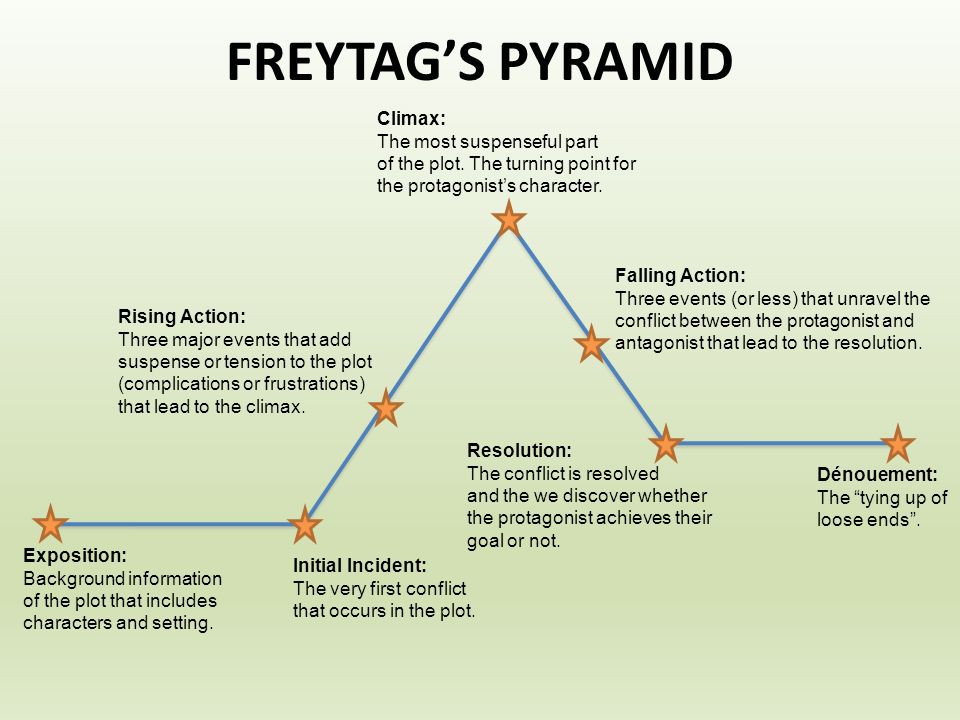
It follows the traditional format of many other stories, but we will use Freytag's pyramid to explain this. Potential spoilers for Uncharted: The Lost Legacy:
Exposition: Chloe is the main character of this story, set in India. We learn a bit of mythology around Ganesh and the main theme the story will follow.
Initial incident: We are introduced to the main villain, Asav, as well as Chloe's new partner on this adventure, Nadine. Nadine and Chloe don't get off on the right foot which creates the initial conflict.
Rising action: We learn that Chloe and Nadine are searching for the Tusk of Ganesh, and want to find it before Asav. This leads them to solving many puzzles and fighting bad guys.
Climax: Asav gets the Tusk, and Chloe and Nadine are almost killed.
Falling action: Chloe, Nadine and a third character team up once again to chase after Asav.
Resolution: Chloe and Nadine defeat Asav and get the Tusk back.
Denouement: Chloe and Nadine become travelling partners and are now good friends.
I hadn't actually appreciated how simple the narrative for this game is, but it does indeed follow the traditional approach to narrative (with a few added twists and turns). Therefore, since this game is a very popular and well received adventure game, I will consider this methodology when writing my own game's narrative.
FRAYTAG. G (2017) Freytag's Pyramid. 1st ed. [EBOOK] L.Kip Wheeler, p.1. Available at: https://web.cn.edu/kwheeler/documents/Freytag.pdf [Accessed 10th May 2020]
NAUGHTY DOG (2017) Uncharted: The Lost Legacy [DISC] PlayStation4. Santa Monica, California: Sony Interactive Entertainment
FRAYTAG. G (2017) Freytag's Pyramid. 1st ed. [EBOOK] L.Kip Wheeler, p.1. Available at: https://web.cn.edu/kwheeler/documents/Freytag.pdf [Accessed 10th May 2020]
NAUGHTY DOG (2017) Uncharted: The Lost Legacy [DISC] PlayStation4. Santa Monica, California: Sony Interactive Entertainment
Tuesday, 10 March 2020
Storytelling and Gaming 5 - Tomb Raider research
Because I apparently don't play any other video games, I will be doing some research on one of my favourite video games of all time; the original Tomb Raider game released in 1996 on the Sony PlayStation. Though I do still own a copy on PS1, my playthrough was on the PC version.
Tomb Raider was revolutionary at the time for its single-player narrative and complex 3D level design in a time where the jump to 3D had only just begun. It also was praised for its portrayal of a female action hero taking the lead, with Lara Croft front and centre as gaming's newest celebrity. To this day she remains one of the most iconic female characters in video game history, all thanks to this game.

I still think that this game holds up very well today. I am not phased by it's awkward tank controls due to playing this game multiple times throughout my life. What this game nails is the atmosphere. The feeling of isolation and loneliness in these dark caves and tombs. Some of the levels even felt like you were in a horror game, due to it's perfect sound design and large sprawling levels. Besides Lara, there are only 6 other non playable characters, making each level feel untouched and dangerous. It's this feeling of isolation that I would like to instil in the player of my own game, and something I will try my best to honour that Tomb Raider managed so excellently 24 years ago.
CORE DESIGN. (1996) Tomb Raider [DISC] PlayStation. Derby, England: Eidos Interactive
Tomb Raider was revolutionary at the time for its single-player narrative and complex 3D level design in a time where the jump to 3D had only just begun. It also was praised for its portrayal of a female action hero taking the lead, with Lara Croft front and centre as gaming's newest celebrity. To this day she remains one of the most iconic female characters in video game history, all thanks to this game.
I still think that this game holds up very well today. I am not phased by it's awkward tank controls due to playing this game multiple times throughout my life. What this game nails is the atmosphere. The feeling of isolation and loneliness in these dark caves and tombs. Some of the levels even felt like you were in a horror game, due to it's perfect sound design and large sprawling levels. Besides Lara, there are only 6 other non playable characters, making each level feel untouched and dangerous. It's this feeling of isolation that I would like to instil in the player of my own game, and something I will try my best to honour that Tomb Raider managed so excellently 24 years ago.
CORE DESIGN. (1996) Tomb Raider [DISC] PlayStation. Derby, England: Eidos Interactive
Storytelling and Gaming 4 - Deciding the style
I had two very different ideas of where to go for my Twine game.
My initial idea was to create a narrative based on a character who has recently gone through a breakup, and the game would focus on their inner dialogue and how they move on from the heartbreak. This felt quite personal to me and I thought for that reason it might be a good idea to express myself through a story. The game would have featured some player choice such as what the character does throughout their day and what they focus their mind on. It would be fairly similar to a game such as Life Is Strange, for example, which is much more focused on realistic characters than any fantasy elements.
Whilst I figured this concept was fairly unique and could be interesting, I ultimately decided against it for a few reasons. Mostly, I'm not an experienced writer, so it might be difficult to convince the player to sympathise with the protagonist and also make the character seem believable and not cringe-worthy. For this reason I chose a different idea.
I have decided instead to create my own adventure in the vain of a Tomb Raider or Uncharted game. This is because these types of single-player games are what I enjoy playing the most and therefore I would feel a bit more passionate writing about them. I've been playing these adventure games my whole life so I feel like writing the story will be like second nature. Deciding what the protagonist will do in a cave or tomb or wherever they are will flow naturally for me, which I think is quite important. Since my game is text-based focused it needs to feel believable through the language, so if I don't feel 100% confident in the material then the player won't believe it.
I will subsequently do research based on adventure games to get a grasp of the genre.
Wednesday, 12 February 2020
Storytelling and Gaming 3 - Twine
I spoke to one of my friends the other day from another university and she told me about a piece of software she was introduced to in her own Storytelling and Gaming module. She told me about a storytelling software called "Twine" which is a script-based game and is great for telling narratives. The software is definitely familiar to games such as "Colossal Cave Adventure" which features a text-based narrative with choices for the player to take. This will result in multiple different paths and endings which increases replayability.
This idea really appeals to me, because it is a unique way of telling stories that is rarely explored by mainstream game developers in the current age of gaming. Since this module also focuses on the narrative of the game, using Twine would force me to focus on the story of the game more than I usually would if I were making my game in Unity, since I wouldn't have to worry about making assets and coding.
This being said, I believe I can include some photos / images in my story as well as sounds and music to increase the atmosphere of the game. Whilst this isn't something I will focus on as the story is more important, I like the option of doing this for the finishing touches of the module.
I'm still unsure about what kind of story I want to tell, but I know that Twine is what I want to use to make my game.
CROWTHER. W & WOODS. D (1977) Colossal Cave Adventure [DISC] PC.
KILMAS. C (2009) Twine [SOFTWARE] Windows PC
This idea really appeals to me, because it is a unique way of telling stories that is rarely explored by mainstream game developers in the current age of gaming. Since this module also focuses on the narrative of the game, using Twine would force me to focus on the story of the game more than I usually would if I were making my game in Unity, since I wouldn't have to worry about making assets and coding.
This being said, I believe I can include some photos / images in my story as well as sounds and music to increase the atmosphere of the game. Whilst this isn't something I will focus on as the story is more important, I like the option of doing this for the finishing touches of the module.
I'm still unsure about what kind of story I want to tell, but I know that Twine is what I want to use to make my game.
CROWTHER. W & WOODS. D (1977) Colossal Cave Adventure [DISC] PC.
KILMAS. C (2009) Twine [SOFTWARE] Windows PC
Tuesday, 4 February 2020
Storytelling and Gaming 2 - Class research
In order to understand games better Mikayla told us to bring in information about some games so that we could discuss them in class and even play some games as well. I brought in my Nintendo Switch and introduced some of my friends to some of my favourite games such as Super Smash Bros Ultimate and Bayonetta, the latter being one of my favourite games of all time. We played some games in class and some Smash Bros and sadly I did not win but I will get there Joe. My friend Fergus brought in some trivia games we could play with a Star Wars theme which was a much more traditional approach to playing games.
Mikayla suggested that we research some more games that we are interested in and play them in our spare time. I decided that since some of the games I player in class were from the last 2 generations of gaming, that I should play something a little older. So I will go home today and play the original Tomb Raider game released in 1996 for the Sega Saturn, PlayStation 1 and PC. Tomb Raider is one of my favourite game series so it will be fun to revisit those games.

Mikayla suggested that we research some more games that we are interested in and play them in our spare time. I decided that since some of the games I player in class were from the last 2 generations of gaming, that I should play something a little older. So I will go home today and play the original Tomb Raider game released in 1996 for the Sega Saturn, PlayStation 1 and PC. Tomb Raider is one of my favourite game series so it will be fun to revisit those games.

CORE DESIGN. (1996) Tomb Raider [DISC] PlayStation. Derby, England: Eidos Interactive
NINTENDO (2018) Super Smash Bros. Ultimate [CARTRIDGE] NintendoSwitch. Japan: Nintendo
PLATINUM GAMES (2009) Bayonetta [DIGITAL DOWNLOAD] NintendoSwitch. Japan: Nintendo
PLATINUM GAMES (2009) Bayonetta [DIGITAL DOWNLOAD] NintendoSwitch. Japan: Nintendo
Monday, 27 January 2020
Storytelling and Gaming 1 - Starting out
This week we began our Storytelling and Gaming module which is very exciting. We have begun by doing some workshops using AR. We imported a 3D model into Unity and coded some animations to push buttons that when tested in live made the character jump and slide on the platform we were holding.
In our lesson with Mikayla we learnt some narrative theory which was a refresher since learning this sort of stuff in A levels. For example we learnt about Freytag's Pyramid involving Rising/falling action and the climax.

We also learnt some of the different methods used to create interactive narratives. This includes augmented reality, alternate reality, virtual reality. We also were reminded of all of the different generations of gaming and we were also shown the evolution of certain game franchises such as Zelda, Super Mario, Megami Tensai etc.
Then Mikayla informed us that our final project had to be AR related which we weren't in love with the idea of. So I will begin to think about some AR projects I could relate to narrative.
FRAYTAG. G (2017) Freytag's Pyramid. 1st ed. [EBOOK] L.Kip Wheeler, p.1. Available at: https://web.cn.edu/kwheeler/documents/Freytag.pdf [Accessed 10th May 2020]
In our lesson with Mikayla we learnt some narrative theory which was a refresher since learning this sort of stuff in A levels. For example we learnt about Freytag's Pyramid involving Rising/falling action and the climax.
We also learnt some of the different methods used to create interactive narratives. This includes augmented reality, alternate reality, virtual reality. We also were reminded of all of the different generations of gaming and we were also shown the evolution of certain game franchises such as Zelda, Super Mario, Megami Tensai etc.
Then Mikayla informed us that our final project had to be AR related which we weren't in love with the idea of. So I will begin to think about some AR projects I could relate to narrative.
FRAYTAG. G (2017) Freytag's Pyramid. 1st ed. [EBOOK] L.Kip Wheeler, p.1. Available at: https://web.cn.edu/kwheeler/documents/Freytag.pdf [Accessed 10th May 2020]
Subscribe to:
Posts (Atom)